
Cupping Therapy Explained: Is It Right for You?
Maybe you've seen an Olympic athlete with perfectly round circles on their back.
Or perhaps a friend posted a photo after their massage with dark circular marks and said,
"You have to try cupping therapy!"
If you've been curious, you're not alone.
Cupping therapy has become one of the most requested massage add-ons in recent years.
But one of the biggest misconceptions is that there's only one way to perform cupping.
The truth is...
There are several different types of cups.
Different massage therapists use different techniques.
And no single method is considered "the best."
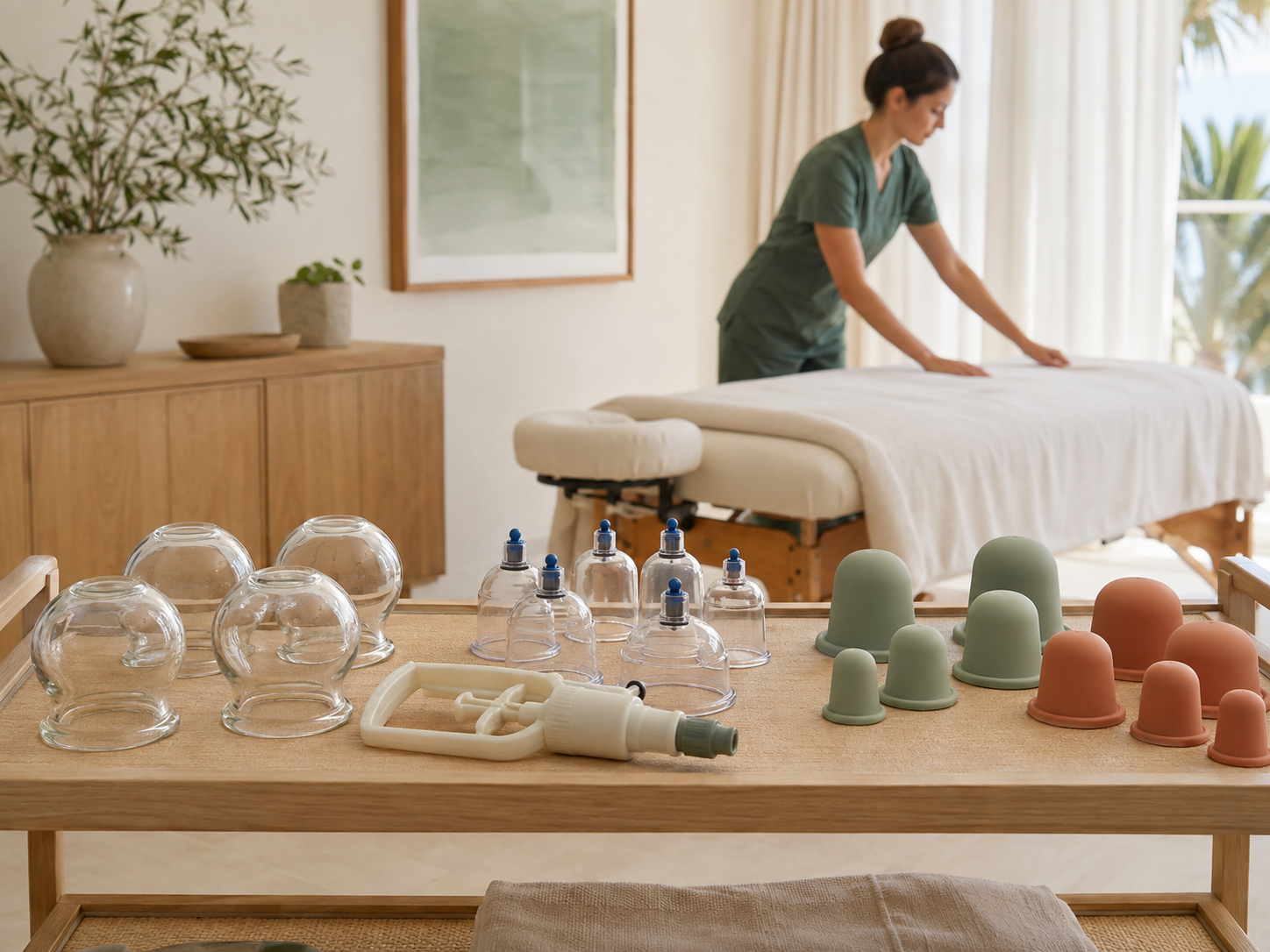
At i‑thriv Wellness Anywhere, every massage therapist brings their own training, experience, and preferred cupping equipment. Some therapists work primarily with glass cups, others prefer plastic pump cups, and many enjoy the flexibility of silicone cups.
The goal isn't choosing the "right cup."
The goal is choosing the right technique for your body.
Let's take a closer look at how cupping works and whether it may be a good addition to your massage.
What Is Cupping Therapy?
Cupping therapy is an ancient form of manual therapy that has been practiced in various cultures for centuries.
Instead of applying pressure downward into the muscles like traditional massage, cupping gently lifts the skin and underlying soft tissues using suction.
Think of it this way.
Massage often works by pressing into tight muscles.
Cupping works by gently lifting the tissues upward.
Many people enjoy combining both techniques because they create very different sensations.
How Does Cupping Work?
During your session, your massage therapist places specially designed cups on your skin.
These cups create gentle suction, lifting the skin and the tissue beneath it.
Depending on the technique, the cups may:
- Remain in one place for a short period
- Glide smoothly across the skin using massage oil
- Be moved to different muscle groups throughout the session
The amount of suction is always adjusted based on your comfort level and your therapist's professional judgment.
Glass Cupping
Glass cups are one of the oldest and most traditional forms of cupping therapy.
Traditionally, practitioners briefly introduce heat into the cup before placing it on the skin, creating suction as the air cools. Modern practitioners may use different methods depending on their training.
Why Some Therapists Prefer Glass Cups
Glass cups:
- Create consistent suction
- Glide smoothly during massage
- Are durable and reusable
- Are commonly used by therapists trained in traditional cupping techniques
Many therapists appreciate the smooth feel and controlled suction that glass cups provide.
Plastic Pump Cupping
Plastic cups use a handheld pump to create suction instead of heat.
These are very common in modern massage therapy practices.
Benefits of Plastic Cups
Plastic cups allow therapists to:
- Precisely control the amount of suction
- Easily adjust pressure during treatment
- Target specific muscles
- Customize each cup individually
This level of control makes plastic cupping a popular choice for many massage therapists.
Silicone Cupping
Silicone cups are soft, flexible, and easy to move across the skin.
Instead of using heat or a pump, the therapist gently squeezes the cup before placing it on your body to create suction.
Why Therapists Like Silicone Cups
Silicone cups are excellent for:
- Gentle cupping sessions
- Dynamic movement
- Gliding techniques
- Sensitive clients
- Areas with more body contours
Many clients describe silicone cupping as feeling smooth, relaxing, and less intense than firmer suction methods.
Which Type Is Best?
Here's the answer most people don't expect.
There isn't one "best" cup.
The best results come from:
- The therapist's training
- Their experience
- Their assessment of your muscles
- Your comfort level
- Your wellness goals
At i‑thriv Wellness Anywhere, different providers use different cupping systems.
That's completely normal.
Just like chefs have favorite knives or photographers have favorite cameras, massage therapists often develop preferences based on their experience and specialized training.
Every therapist works a little differently, and that's one of the strengths of our provider network.
Dry Cupping vs. Gliding Cupping
There are two common ways cupping is performed during massage.
Dry (Stationary) Cupping
The cups are placed on the skin and remain in one position for a short period.
This allows the therapist to focus on specific areas of muscle tension.
Gliding Cupping
Massage oil is applied first.
The therapist then gently glides the cups across the muscles.
Many clients say this feels similar to a massage, but with a gentle lifting sensation instead of pressure.
Both approaches can be incorporated into a customized treatment depending on your needs.
What Does Cupping Feel Like?
Many first-time clients expect cupping to hurt.
Most are pleasantly surprised.
Instead of feeling pressure...
You'll usually feel a gentle pulling or lifting sensation.
Some areas may feel tighter than others.
That's completely normal.
Your therapist can always reduce the amount of suction if needed.
Communication is important throughout your session.
Those Circular Marks—Should You Be Worried?
Probably not.
One of the most recognizable parts of cupping therapy is the circular marks that may appear afterward.
These marks are not bruises in the traditional sense.
They're temporary changes in skin color that can occur because of the suction created by the cups.
Some people develop:
- Very light pink circles
- Light red marks
- Darker purple marks
Others develop no visible marks at all.
Everyone responds differently.
These marks are generally painless and often fade over several days to about two weeks, depending on the individual.
If you're planning family photos, a wedding, beach vacation, or another event where exposed skin is important, let your therapist know before your appointment.
Who May Benefit From Cupping Therapy?
Many clients choose cupping because they experience:
- Tight shoulders
- Neck tension
- Upper back discomfort
- Lower back tightness
- Muscle stiffness after exercise
- General muscle tension
- A desire to try something different as part of their wellness routine
While some people report relief from these concerns, research on cupping therapy is still evolving, and results vary from person to person.
Cupping should be viewed as a complementary wellness technique—not a guaranteed treatment or cure.
Who Should Avoid Cupping Therapy?
Cupping isn't appropriate for everyone.
Your massage therapist may recommend avoiding cupping if you have certain conditions, including:
- Open wounds or healing incisions
- Sunburn
- Skin infections
- Active rashes or severe eczema in the treatment area
- Fragile or easily damaged skin
- Certain bleeding disorders
- Use of blood-thinning medications (depending on your healthcare provider's guidance)
- Recent fractures in the treatment area
- Certain types of cancer or ongoing cancer treatment (unless cleared by your healthcare team)
- Fever or acute illness
Pregnant clients may also have areas where cupping is not recommended.
Always tell your massage therapist about your medical history, medications, recent surgeries, pregnancy, or any changes in your health before your session.
When in doubt, talk with your healthcare provider.
Can I Add Cupping to My Massage?
Absolutely.
Many clients choose cupping as an add-on to a Swedish massage, deep tissue massage, or sports massage.
Instead of replacing massage, cupping is often used to complement it.
For example, your therapist may:
- Begin with traditional massage
- Use cupping on particularly tight muscle groups
- Finish with massage techniques to help the area relax
Every session is customized to your goals.
Mobile Cupping Therapy
One of the advantages of booking with i‑thriv Wellness Anywhere is convenience.
Our licensed massage therapists travel directly to your:
- Home
- Hotel
- Vacation rental
- Office
We'll bring the equipment needed for your massage—including cupping supplies if your selected provider offers that service.
When booking, be sure to let us know if you're interested in adding cupping so we can match you with a provider who performs it.
Frequently Asked Questions
Does every massage therapist use the same cups?
No. Some therapists prefer glass cups, others use plastic pump cups, and others specialize in silicone cupping. Each system has its own advantages, and therapists often choose the equipment that best matches their training and treatment style.
Does cupping hurt?
Most people describe cupping as a gentle pulling or lifting sensation rather than pain. Your therapist can always adjust the amount of suction if needed.
Will I have marks afterward?
You may. Some clients develop temporary circular discoloration, while others have little or no visible marking. The marks typically fade over several days to about two weeks.
Can I add cupping to any massage?
In many cases, yes. Cupping is commonly added to Swedish, deep tissue, and sports massage sessions. Your therapist will determine whether it's appropriate based on your health history and goals.
Every Body Is Different—Your Massage Should Be Too
There's no single technique that's perfect for everyone.
Some people love the flowing strokes of a Swedish massage.
Others prefer the focused work of deep tissue.
And many discover that adding cupping gives them an experience they've never had before.
The important thing isn't choosing the newest trend.
It's finding what helps your body feel its best.
At i‑thriv Wellness Anywhere, we believe massage should never be one-size-fits-all.
That's why our providers customize every session based on your needs, your comfort, and their professional expertise.
Whether your therapist uses glass cups, plastic pump cups, or silicone cups, the goal is always the same:
To help you relax, move more comfortably, and leave feeling better than when you arrived.
If you're curious about cupping therapy, ask about adding it to your next mobile massage appointment.
You may discover your new favorite way to unwind.
Wellness, Anywhere.™
Areas We Serve
- Irvine
- Redlands
- Palm Springs & Desert Cities
- Orange County
- Moreno Valley
- Corona
- Temecula Wine Country
- Inland Empire
- Riverside
Availability varies by location, group size, and provider availability.
Ready to book?
Professional wellness, delivered to you. Wellness, Anywhere.™