
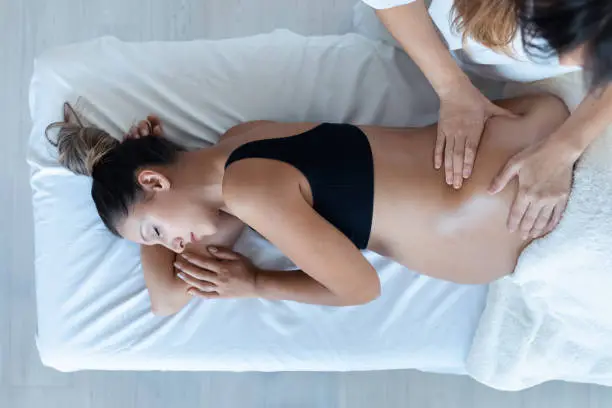
Prenatal Massage Guide: Everything Every Expecting Mom Should Know Before Booking a Massage
Pregnancy is one of the most incredible journeys you'll ever experience.
It's exciting.
Emotional.
Life-changing.
But if we're being honest…
It's also hard on your body.
One day your favorite jeans no longer fit.
The next, your lower back starts aching.
Your hips feel tighter.
Sleeping becomes more difficult.
Your feet begin to swell.
Even something as simple as rolling over in bed can suddenly feel like a workout.
If you've found yourself searching for:
- Prenatal massage near me
- Pregnancy massage near me
- Is prenatal massage safe?
- Mobile prenatal massage
- Massage while pregnant
You're probably looking for relief.
And you're wondering if massage is safe for both you and your baby.
At i‑thriv Wellness Anywhere, we understand those concerns.
Our goal isn't just to help you relax—it's to help you make informed decisions about your care throughout your pregnancy.
Let's walk through everything you should know before scheduling a prenatal massage.
First… Is Prenatal Massage Safe?
For many healthy pregnancies, prenatal massage can be a safe and relaxing experience when performed by a massage therapist who has training in prenatal massage and uses proper positioning and techniques.
However, pregnancy is different for every woman.
That's why we always recommend discussing massage with your OB-GYN, midwife, or healthcare provider—especially if you have a high-risk pregnancy or any medical concerns.
Your provider knows your pregnancy best.
If they recommend avoiding massage, it's important to follow their guidance.
When Can You Receive a Prenatal Massage?
Many prenatal massage providers begin seeing clients during the second trimester (around 13 weeks of pregnancy).
The first trimester is a time of significant changes and carries the highest natural risk of miscarriage. While there is no strong evidence that massage causes miscarriage, some therapists and practices choose not to perform massage during the first trimester out of caution and because pregnancy symptoms may still be changing.
Every provider has different policies.
Always ask before booking.
Who May Need to Wait or Avoid Prenatal Massage?
Prenatal massage may not be appropriate for everyone.
Your healthcare provider may recommend postponing massage if you have certain pregnancy complications or medical conditions.
Examples may include:
- High-risk pregnancy
- Preeclampsia or pregnancy-induced hypertension
- Unexplained vaginal bleeding
- Placenta-related complications
- Signs of preterm labor
- Severe swelling associated with medical concerns
- Blood clotting disorders or a history of blood clots
- Other conditions where your OB-GYN recommends avoiding massage
If you're ever unsure, ask your healthcare provider first.
Your safety—and your baby's safety—always comes first.
Why Positioning Matters During Pregnancy
One of the biggest differences between a regular massage and a prenatal massage isn't the massage itself.
It's how you're positioned.
As your baby grows, your body changes.
The positions that once felt comfortable may no longer be safe.
That's why prenatal massage requires a completely different approach.
Side-Lying Pregnancy Massage: The Gold Standard
At i‑thriv Wellness Anywhere, prenatal massage is performed using the side-lying position, which is considered one of the safest and most comfortable ways to receive massage during pregnancy.
Instead of lying on your stomach or flat on your back, you'll lie comfortably on your side.
We carefully support your body using multiple pillows and bolsters.
Typically, we use between four and eight pillows, depending on your comfort and stage of pregnancy.
These pillows help support:
- Your head and neck
- Your growing belly
- Your back
- Between your knees
- Between your ankles
- Under your arms when needed
Our goal is simple.
We want you to feel completely supported so your body can relax.
Many moms tell us it's the most comfortable they've felt in weeks.
Why Side-Lying Is Recommended
Side-lying positioning helps reduce pressure on important blood vessels, including the inferior vena cava, a large vein that returns blood to your heart.
Lying flat on your back later in pregnancy may compress this vein in some women, which can reduce blood flow and cause symptoms like dizziness or nausea.
By positioning you on your side with supportive pillows, we help create a safer, more comfortable environment for both you and your baby.
Areas That Benefit Most During Pregnancy
Pregnancy changes the way your body carries weight.
As your baby grows, many muscles begin working much harder than before.
Prenatal massage commonly focuses on areas such as:
- Lower back
- Hips
- Glutes
- Legs
- Shoulders
- Neck
These are some of the areas where many expecting mothers experience the most everyday discomfort.
Why Traditional Massage Positions Aren't Recommended
Before pregnancy, you probably received massage while lying:
- Face down (prone)
- Face up (supine)
These positions work well for most people.
Pregnancy changes that.
Lying Face Down
As your pregnancy progresses, lying on your stomach simply isn't practical or comfortable.
It places direct pressure on your growing abdomen.
Lying Flat on Your Back
After the first trimester, spending extended periods flat on your back may place pressure on major blood vessels, which can decrease blood flow and make some women feel lightheaded, nauseated, or uncomfortable.
That's why prenatal massage therapists typically avoid prolonged supine positioning.
What About Massage Tables With a Belly Hole?
You may have seen massage tables or cushions with a cut-out designed for a pregnant belly.
At first glance, they seem like a great idea.
Many expecting mothers think,
"That must be more comfortable."
Surprisingly, not necessarily.
Organizations such as the American Pregnancy Association advise caution with these products.
When the abdomen hangs unsupported through an opening, it may place unnecessary strain on the uterine ligaments and lower back.
For that reason, these cushions are generally not recommended for a full-length relaxation massage. Some healthcare providers may use similar supports briefly for specific treatments, such as certain chiropractic adjustments, but that is different from a 60- or 90-minute massage session.
A properly supported side-lying position is generally considered the preferred option for prenatal massage.
What Does Prenatal Massage Feel Like?
Many moms expect prenatal massage to be very different from a traditional massage.
In many ways, it is.
The pressure is typically gentle to moderate and always adjusted to your comfort level.
Your therapist will work carefully around your changing body while avoiding techniques or positions that aren't appropriate during pregnancy.
The goal isn't deep pressure.
The goal is helping you feel supported, comfortable, and relaxed.
Benefits of Prenatal Massage
Many expecting mothers choose prenatal massage because it may help them:
- Ease everyday muscle tension
- Reduce lower back discomfort
- Relax tight hips and glutes
- Reduce neck and shoulder tension
- Feel more comfortable as pregnancy progresses
- Reduce everyday stress
- Improve relaxation
- Support better sleep
- Create time for self-care before baby arrives
Every pregnancy is unique, and individual experiences vary.
Your Comfort Comes First
Throughout your massage, we'll continue checking in with you.
Need another pillow?
We'll get one.
Want to change positions?
Absolutely.
Need a break?
No problem.
There is no "perfect" position.
There's only the position that feels safest and most comfortable for you.
Frequently Asked Questions
Can I receive prenatal massage during my first trimester?
Some massage therapists accept first-trimester clients, while others wait until the second trimester. Always discuss massage with your healthcare provider and check the therapist's policy before booking.
Do I lie on my stomach?
No. Prenatal massage is typically performed in a side-lying position with pillows supporting your body for comfort and safety.
Is deep tissue massage safe during pregnancy?
Certain deeper techniques may be appropriate in specific muscle groups, but prenatal massage is generally modified for pregnancy. Your therapist should use techniques that are appropriate for your stage of pregnancy and your individual needs.
What if I'm having a high-risk pregnancy?
If your pregnancy is considered high risk or you have concerns such as preeclampsia, bleeding, or signs of preterm labor, consult your healthcare provider before scheduling a massage. They can advise whether massage is appropriate for you.
You're Growing a Human—Give Yourself the Same Care You Give Everyone Else
Pregnancy asks so much of your body.
Every week, your baby grows.
Your posture changes.
Your muscles adapt.
Your body works around the clock, even while you sleep.
It's easy to spend months planning for your baby's arrival.
The nursery.
The baby shower.
The stroller.
The car seat.
But don't forget about the person making all of that possible.
You.
Taking care of yourself isn't selfish.
It's one of the most loving things you can do—for yourself and for your growing family.
If your healthcare provider has cleared you for massage, let us bring a peaceful, professional prenatal massage experience directly to your home.
At i‑thriv Wellness Anywhere, our trained therapists use safe side-lying positioning, thoughtful support, and compassionate care so you can focus on what matters most.
You deserve to feel comfortable.
You deserve to feel supported.
And you deserve a moment to simply breathe.
Wellness, Anywhere.™
Areas We Serve
- Temecula Wine Country
- Inland Empire
- Riverside
- Corona
- Moreno Valley
- Orange County
- Irvine
- Redlands
- Palm Springs & Desert Cities
Availability varies by location, group size, and provider availability.
Ready to book?
Professional wellness, delivered to you. Wellness, Anywhere.™