
Stretch Therapy vs. Massage: Why Your Body May Need Both
Have you ever stood up from your desk and thought,
"Wow... why am I so stiff?"
Or maybe you've finished a workout and noticed your hips feel tight.
Your shoulders don't move the way they used to.
Your back feels sore after a long day.
You know your body doesn't feel right…
You're just not sure what it needs.
Many people start searching online for:
- Stretch therapy near me
- Assisted stretching
- Massage near me
- Mobile massage
- What's better, massage or stretching?
The answer may surprise you.
It's usually not one or the other.
It's understanding what your body is asking for.
At i‑thriv Wellness Anywhere, we offer both professional massage and assisted stretch therapy because they work differently—and together, they can create an incredible wellness experience.
Let's explore the difference.
Massage and Stretching Are Not the Same Thing
Although both help people feel better, massage and stretch therapy have different goals.
Think of it this way.
Massage focuses on helping muscles relax.
Stretch therapy focuses on helping your body move.
Both are valuable.
Both support your wellness.
But they accomplish different things.
What Is Massage?
Massage therapy uses skilled hands and specialized techniques to work with your muscles and soft tissues.
Depending on the type of massage, your therapist may use:
- Long flowing strokes
- Kneading
- Compression
- Deep tissue techniques
- Trigger point work
- Cupping
- Hot stones
Massage is designed to help reduce muscle tension, encourage relaxation, and ease everyday aches and stiffness.
Sometimes your body doesn't need to move more.
Sometimes it simply needs to slow down.
What Is Assisted Stretch Therapy?
Stretch therapy is exactly what it sounds like.
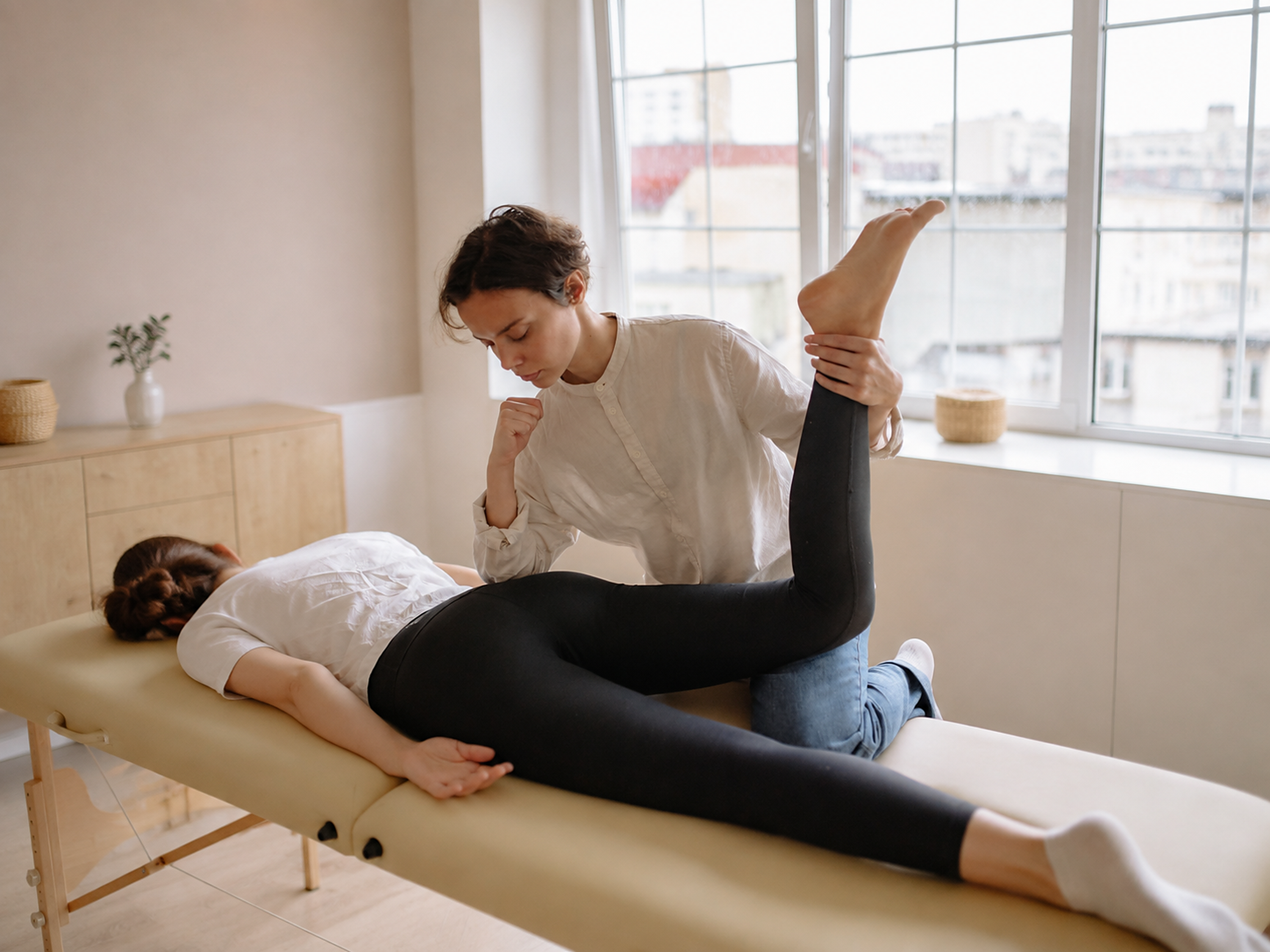
Instead of stretching yourself, a trained professional gently guides your body through a series of controlled stretches.
Because your muscles are relaxed and supported, many people find they can stretch more comfortably than they would on their own.
Stretch therapy focuses on improving movement, flexibility, and mobility—not simply helping you relax.
It's an active form of bodywork that works with your joints and muscles together.
Here's an Easy Way to Think About It
Imagine your body is like a rubber band.
Over time…
You sit at your desk.
Drive your car.
Sleep in the same position.
Exercise.
Lift weights.
Carry children.
Stand at work.
Gradually, that rubber band becomes tighter.
Massage helps the rubber band relax.
Stretch therapy helps the rubber band lengthen and move more freely.
When you combine both…
Your body often feels lighter, looser, and easier to move.
Who Should Choose Massage?
Massage may be the better option if you:
- Feel mentally stressed
- Want to relax
- Have sore muscles
- Experience neck and shoulder tension
- Want to disconnect from a busy week
- Have trouble unwinding
Many clients simply need an hour where someone else takes care of them.
Massage provides exactly that.
Who Should Choose Stretch Therapy?
Stretch therapy may be a great choice if you:
- Feel stiff
- Have limited flexibility
- Sit most of the day
- Exercise regularly
- Lift weights
- Play sports
- Have tight hips
- Feel restricted during movement
- Want better mobility
If you've ever said,
"I just don't move like I used to,"
Stretch therapy may be worth exploring.
Stretch Therapy Is Great for Office Workers
Think about your typical workday.
You sit.
You answer emails.
You attend meetings.
You drive home.
Then you sit on the couch.
Your body stays in the same positions for hours.
Over time you may notice:
- Tight hip flexors
- Rounded shoulders
- Tight hamstrings
- Neck stiffness
- Lower back discomfort
Stretch therapy focuses on restoring movement to muscles that spend all day in shortened positions.
Stretch Therapy Is Also Popular With Active People
Stretch therapy isn't only for people who sit all day.
It's also popular with:
- Runners
- Cyclists
- Weightlifters
- Pickleball players
- Golfers
- Tennis players
- CrossFit athletes
- Yoga enthusiasts
- Weekend warriors
The more your body moves…
The more important recovery becomes.
Why We Love Combining Massage and Stretch Therapy
This is where the magic happens.
Imagine receiving a relaxing massage first.
Your muscles begin to soften.
Your breathing slows.
Your body relaxes.
Now imagine finishing your session with assisted stretching.
Because your muscles are already warm and relaxed, stretching often feels more comfortable.
It's one of our favorite combinations.
Many clients tell us they leave feeling:
"Like I can actually move again."
Instead of choosing between massage or stretching...
You get the benefits of both.
Add Assisted Stretching to Your Massage
At i‑thriv Wellness Anywhere, assisted stretching is available as an add-on service to your massage appointment.
It's the perfect option for clients who want a little more than relaxation.
Your therapist may focus on areas such as:
- Neck
- Shoulders
- Chest
- Lower back
- Hips
- Hamstrings
- Quadriceps
- Calves
Every stretch is performed gently and within your comfort level.
You should never feel forced into a position.
Good stretch therapy works with your body—not against it.
Benefits of Combining Massage and Stretch Therapy
Many clients enjoy this combination because it may help them:
- Feel more relaxed
- Improve flexibility
- Increase mobility
- Reduce everyday muscle tension
- Feel less stiff
- Move more comfortably
- Support recovery after exercise
- Improve overall body awareness
Everyone's body responds differently, but many people notice they leave feeling lighter and more balanced.
Stretching Should Never Be Painful
One of the biggest misconceptions is that stretching has to hurt to be effective.
It doesn't.
You should feel a comfortable stretch.
Not sharp pain.
Not forcing.
Not bouncing.
Your therapist will communicate with you throughout the session to ensure every stretch stays within a comfortable range.
Who Should Avoid Stretch Therapy?
Stretch therapy may not be appropriate for everyone.
You should always tell your therapist if you have:
- Recent surgery
- Recent fractures
- Acute muscle or ligament injuries
- Joint instability
- Severe osteoporosis
- Certain neurological conditions
- Uncontrolled pain
- Pregnancy (certain stretches may need to be modified)
- Any condition your physician has advised against stretching
Your therapist can modify or avoid stretches when necessary and may recommend getting medical clearance before treatment.
Your safety always comes first.
Mobile Massage and Stretch Therapy
One of the best parts?
You don't have to travel.
At i‑thriv Wellness Anywhere, we bring professional wellness directly to your:
- Home
- Hotel
- Vacation rental
- Office
Whether you're recovering from a workout, spending long hours at a desk, or simply wanting to move more comfortably, we'll bring everything needed for your appointment.
Frequently Asked Questions
Which is better: massage or stretch therapy?
Neither is better—they simply have different goals. Massage focuses on relaxing muscles and reducing tension, while stretch therapy focuses on improving mobility and flexibility. Many clients enjoy combining both.
Can I add stretching to my massage?
Yes. Assisted stretching is available as an add-on service with many of our massage appointments. Be sure to request it when booking.
Does stretch therapy hurt?
No. Stretch therapy should feel controlled and comfortable. Your therapist will never force a stretch beyond your comfort level.
Is assisted stretching good after a massage?
Many clients enjoy stretching after massage because relaxed muscles often move more comfortably. Your therapist will determine the best approach based on your goals and condition.
You Don't Have to Choose Between Feeling Relaxed and Moving Better
Your body works hard every single day.
It carries you through work.
Workouts.
Family life.
Travel.
Long commutes.
Late nights.
Sometimes what your body needs is relaxation.
Sometimes it needs movement.
And many times…
It needs both.
That's why combining massage and assisted stretch therapy can be such a powerful wellness experience.
Massage helps your muscles let go.
Stretch therapy helps your body move the way it was designed to move.
Together, they can leave you feeling not only more relaxed—but more comfortable walking, reaching, bending, and enjoying everyday life.
At i‑thriv Wellness Anywhere, we believe wellness isn't about choosing one technique over another.
It's about creating a session that's personalized for your body, your lifestyle, and your goals.
Ask about adding Assisted Stretch Therapy to your next massage appointment and experience how recovery and relaxation can work hand in hand.
Because feeling good isn't just about less pain.
It's about moving through life with greater freedom.
Wellness, Anywhere.™
Areas We Serve
- Irvine
- Redlands
- Palm Springs & Desert Cities
- Orange County
- Moreno Valley
- Corona
- Riverside
- Inland Empire
- Temecula Wine Country
Availability varies by location, group size, and provider availability.
Ready to book?
Professional wellness, delivered to you. Wellness, Anywhere.™